





For 150 farming families in Alcarràs, Spain, livestock manure has long been a practical challenge. Now, with biogas upgrading added to the equation, the same material is opening up a new route to biomethane production and additional value for the cooperative.
In Alcarràs, livestock manure is not in short supply.
The area is one of Europe’s most livestock-intensive regions, with large volumes of slurry and manure generated every year. For individual family farms, managing those volumes efficiently is difficult. That challenge was one of the reasons local farmers began working together on a shared solution.
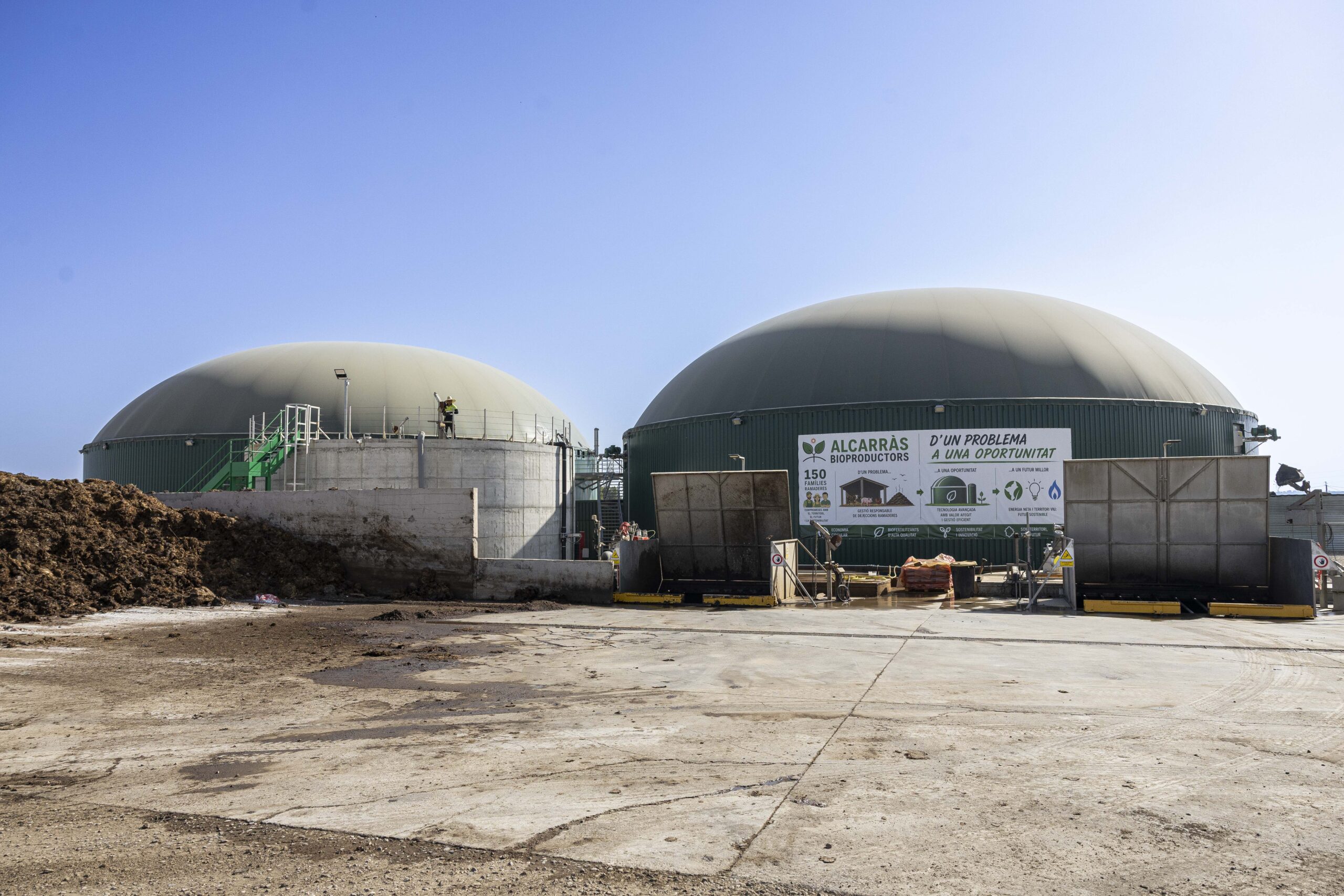
Today, Alcarràs Bioproductors brings together around 150 livestock farming families in a cooperative model designed to manage and transform agricultural residues more effectively. The organisation describes its objective as finding new ways to maximise the value of livestock manure while supporting both the local farming community and the environment.
What began as a manure-management problem has gradually become something broader.
The cooperative developed composting, anaerobic digestion and biogas production, creating a circular system in which livestock residues could be turned into renewable energy and fertiliser products.
And now, with biogas upgrading, the gas itself can do more.
Using renewable natural gas to create value
Anaerobic digestion has already given Alcarràs Bioproductors a way to extract energy from livestock manure.
Inside the plant, organic material is broken down without oxygen, producing biogas and digestate as part of the process. The biogas can be used as a renewable energy source to drive a CHP engine for electricity production, while the digestate retains nutrients that can be returned to agricultural use. Alcarràs Bioproductors describes this combination as part of its wider circular model for turning waste into useful resources.
Initially, the biogas was used for electricity generation.
For Alcarràs Bioproductors, the next question was whether the gas could be transformed into a higher-value energy product and used in a different way, which required an additional step.
Moving from biogas to biomethane production
To enable the move from conventional biogas use to biomethane production, Alcarràs Bioproductors selected Biogasclean’s UPG-MS biogas upgrading technology.
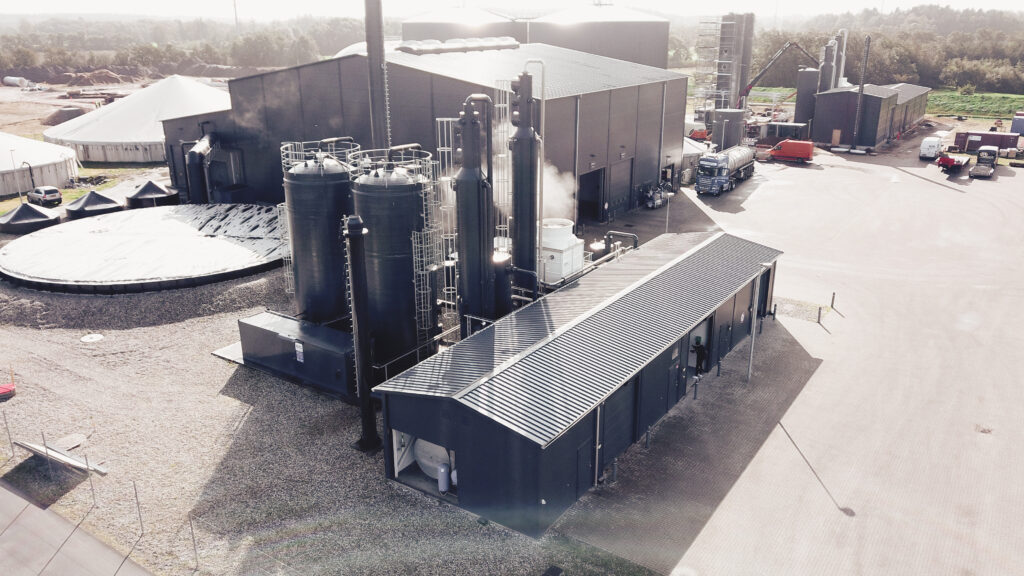
The solution was adapted to the plant’s operating requirements and supported by Biogasclean’s technical team in Spain. According to project information supplied by Biogasclean, the plant sends an average biogas flow of approximately 500 Nm³/hour to the upgrading system.
The technical principle is straightforward.
During biogas upgrading, carbon dioxide and other unwanted components are removed from the raw biogas, increasing its methane concentration. The result is biomethane with a much wider range of potential uses than untreated biogas.
For Alcarràs, that changes the options available.
The plant is no longer limited to using its biogas for electricity generation. The gas can also be upgraded to biomethane and compressed as Bio-CNG, creating another route for using and commercialising the energy already being produced from livestock manure.
Flexibility matters more than the technology alone
That flexibility is central to the project.
The feedstock has not changed. The cooperative is still working with the same livestock manure generated by farms in the surrounding area.
What has changed is what can be done with the gas produced from it.
According to the project brief, the biomethane can now be compressed and transported for injection into the local gas system using the Cycle0 central grid injection point. This gives Alcarràs Bioproductors another potential revenue stream alongside the existing value created through biogas and digestate and means that the rural location of the plant is not an issue.
For Santi Pelegrí of Alcarràs Bioproductors, the ability to move between different uses of the gas was one of the key reasons for the project:
“The Biogasclean biogas upgrading solution UPG-MS was adapted to our needs, giving us the flexibility and reliability we need. Being able to switch from biogas use to upgrading biomethane opens an important revenue stream for our co-operative and the strong operational support we received gives us confidence we can maintain high availability.”
The point is not simply that the plant can now produce biomethane.
It is that upgrading gives the cooperative more choices about how the renewable energy contained in the manure can be used.
A wider circular system is taking shape
Biomethane is only one part of the system being developed in Alcarràs.
The cooperative’s wider model combines composting, biogas production and a biohub intended to create further value from agricultural residues. Public information from Alcarràs Bioproductors describes the site as a place where new uses for by-products and bioeconomy applications can be developed alongside the existing composting and energy activities.
The digestate produced during anaerobic digestion also remains an important part of that circular approach.
Alcarràs Bioproductors says the material can be used in agricultural applications because it retains readily available nutrients, including nitrogen. In that sense, the process is not only about producing energy. It is also about keeping nutrients in use within the agricultural system.
For the farmers involved, that matters.
From a local problem to a recognised model
The approach has also attracted wider attention.
In 2026, Alcarràs Bioproductors was named the winner of the agro-industry category in the 2025 PITA awards, presented by the Catalan Government.
The award recognised the cooperative’s circular bioeconomy system for transforming livestock manure into renewable energy and high-quality organic fertilisers.
The cooperative is not changing the fundamental nature of its farming operations. It is changing what can be extracted from the resources those farms already produce.
The same feedstock, with more possibilities
Alcarràs Bioproductors was already producing renewable energy before the upgrading system was added.
With biomethane production added to the system, Alcarràs can move beyond electricity generation and create another renewable gas product from material already flowing through the plant.
Biogasclean’s role in that transition is deliberately practical: provide an upgrading system adapted to the plant, support its operation and give the cooperative the flexibility to use its gas differently.
For a group of farmers who originally came together because they needed a better way to manage manure, that is a significant shift.
The feedstock has not changed. What has changed is what they can now make from it.